
Desk & posture pain
Eight hours a day
in one shape.
It is not that sitting is bad for you. It is that holding any single position for forty hours a week asks something of your body that it was not built to give.
What actually helps
Movement beats
a better chair
The pattern is almost always the same: neck and upper back stiffen, hip flexors shorten, glutes stop contributing, and the low back or the neck ends up carrying it. None of that is caused by one bad position — it is caused by one position for too long, repeated for years.
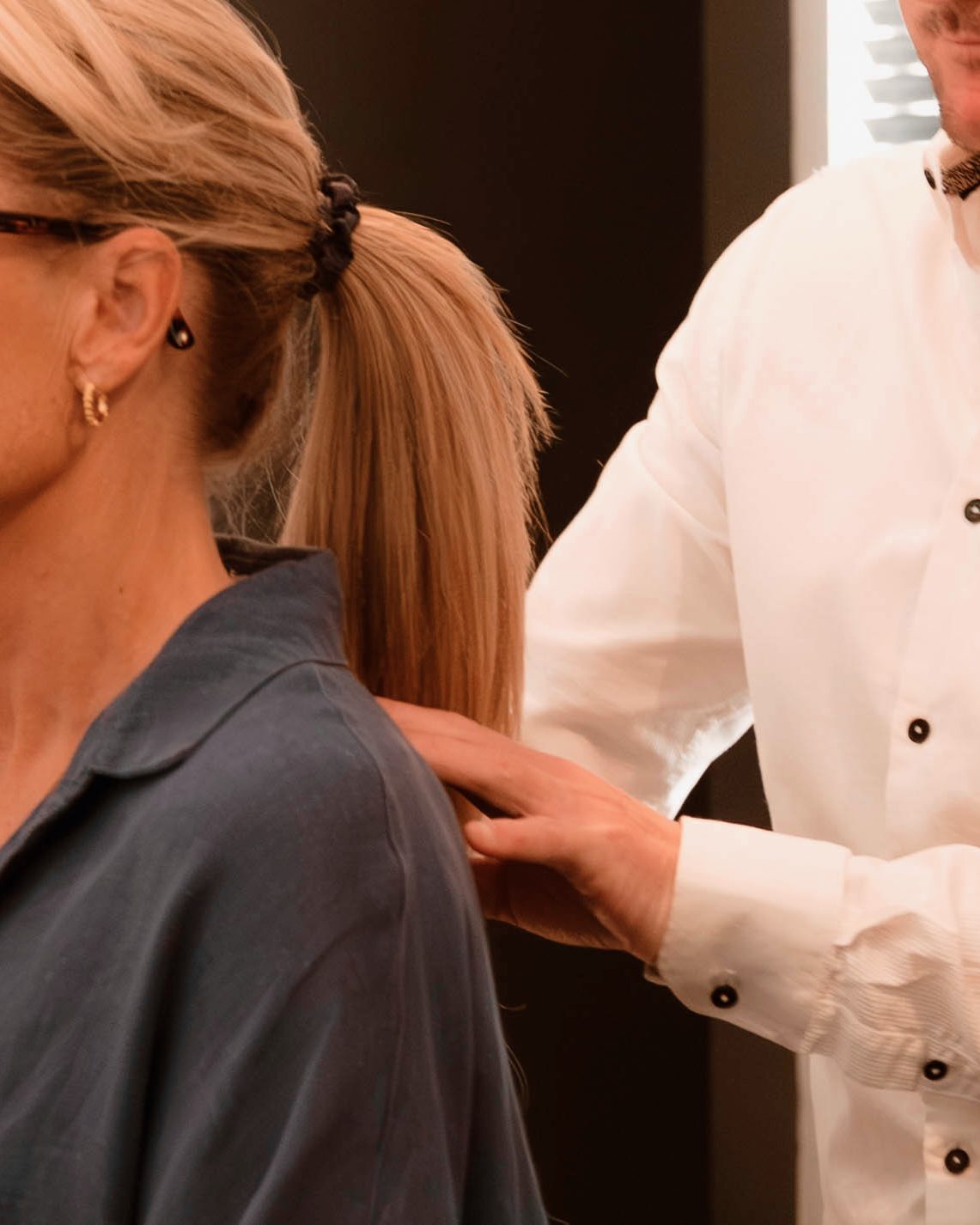
The assessment finds which of those has actually happened to you rather than which ones happen in general, and the hands-on work goes there.
Sound familiar
What people describe
- Fine in the morning, wrecked by 3pm, better on the weekend
- You notice it most on the drive home
- A new chair, a standing desk or a monitor arm changed less than you hoped
- Shoulders and jaw are tight by the end of a long call
- It eases when you move and returns within an hour of sitting back down
What happens
Treatment, and
two things to change
Hands-on work through whatever the assessment found — usually neck, upper back and hips, in some combination. Firm where it needs to be, explained first.
Then the practical half: two or three specific changes to how your working day is shaped. Not a lecture about posture, and not a shopping list.
What else we treat
The others we
see most
Neck & shoulders
The one that starts at 3pm and is still there at bedtime.
Low back
Fine until you bend to put your shoes on.
Headaches
Starting at the base of the skull, not behind the eyes.
Tennis & golfer’s elbow
Six months of “it’ll settle”. It has not settled.
Sports injuries
The niggle you are still training on.
Practical
Before you call
Health funds
Claim it
on the spot
- Medibank
- Bupa
- HCF
- nib
- HBF
- Australian Unity
- ahm
HICAPS is on the desk, and it is connected to every private health insurer in Australia — not just the ones listed. Tap your card after the appointment, the rebate comes off on the spot, and you pay the gap rather than the lot.
What comes back depends on your level of extras cover, and myotherapy is not on every policy. The terminal tells you the exact number before you leave the room, so there is no invoice to chase and nothing to find out later.
FAQ
Questions people actually ask
Do I need a standing desk?
Not necessarily. Standing all day produces its own set of complaints. What helps is changing position regularly, and a sit-stand desk is one way to make that easy rather than a cure in itself.
Is my posture causing this?
Probably less than you have been told. Time in one position matters more than which position it is, and that is good news — it is far easier to change.
Will one appointment fix it?
One appointment will usually tell you what is going on and take the edge off. Something you have built over years of working weeks takes more than one visit to change, and Dale will say so plainly rather than book you in indefinitely.
Book about your desk pain
Forty minutes in Mornington. What is actually happening, and what to change about your week.