
Conditions
Where it hurts,
and why it keeps hurting
Six things walk through this door most weeks. Find yours and read what we actually do about it.
What we treat
The six we
see most
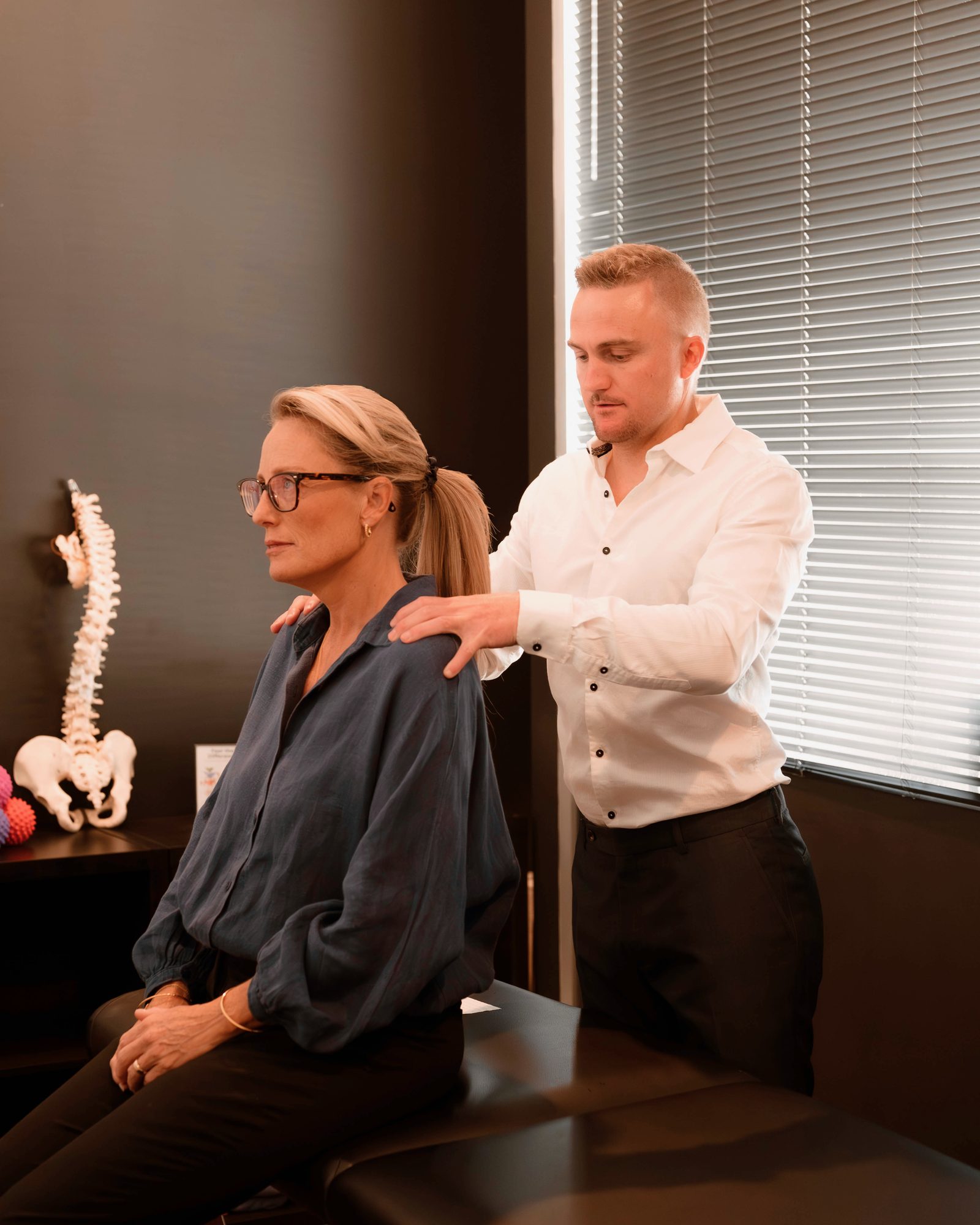
Neck & shoulders
Screen posture, carrying, sleeping awkwardly, and the tension that turns into a headache by Thursday.
Low back
Lifting, gardening, long drives, and the mornings where getting out of bed is the hardest thing you do all day.
Headaches
The kind that builds from the neck up, often with a jaw and shoulder involved that nobody has looked at.
Tennis & golfer’s elbow
Gripping, lifting, a mouse, a racquet or a trade. Slow to come on and notoriously slow to leave if it is left alone.
Desk and screen pain
Upper back, neck and shoulder load from sitting — the most common thing that walks through the door.
Sports injuries
Calves, hamstrings, shoulders and hips. Running, footy, golf, swimming, and the gym four times a week.
Not on the list
Bring it anyway
This list is the common ground, not the boundary. Hips, knees, jaw, calves, feet, ribs and the vague ones that have never had a name all turn up here too. If you can point at it and it has been there long enough to annoy you, it is worth an assessment.
And if it turns out to belong somewhere else, you will be told that on the day.
Your first visit
What actually
happens
You talk, we listen
Where it hurts, how long it has been going on, what makes it worse. Most people have already worked out half the answer before they arrive.
We assess
How the joint moves, what fires, what has quietly stopped doing its job. This is the part a straight massage skips, and it is usually where the answer is.
Treatment
Hands-on work aimed at what the assessment found, not at wherever it happens to be tender. Dry needling, cupping and stretching where they earn their place.
A plan you understand
What we found, what we are going to do about it, and what to do between visits. You will know the reasoning, not just the appointment time.
Practical
Before you call
Health funds
Claim it
on the spot
- Medibank
- Bupa
- HCF
- nib
- HBF
- Australian Unity
- ahm
HICAPS is on the desk, and it is connected to every private health insurer in Australia — not just the ones listed. Tap your card after the appointment, the rebate comes off on the spot, and you pay the gap rather than the lot.
What comes back depends on your level of extras cover, and myotherapy is not on every policy. The terminal tells you the exact number before you leave the room, so there is no invoice to chase and nothing to find out later.
FAQ
Questions people actually ask
Do I need a referral?
No. You can book myotherapy directly.
What should I wear?
Loose, comfortable clothing you can move in. You stay fully dressed for the whole appointment — there is nothing to change into and nothing to take off.
Will it hurt?
Some of it is firm, and a stubborn area can be tender while it is worked on. It should never be something you have to brace through — say so and the pressure changes.
Is myotherapy the same as massage?
There is real overlap in the hands-on work, but myotherapy assesses first and treats what the assessment found. If you are not sure which you want, the two-minute questionnaire on our massage or myotherapy page will tell you.
Can I claim it on private health?
Myotherapy is generally claimable if you hold extras cover, but rebates and waiting periods vary between funds. Worth a two-minute call to yours before you book.
Book the one that fits
Forty minutes. Assessment, treatment, and a plan you understand.